



This is some text inside of a div block.
Why More Companies Are Renovating Instead of Relocating
May 11, 2026



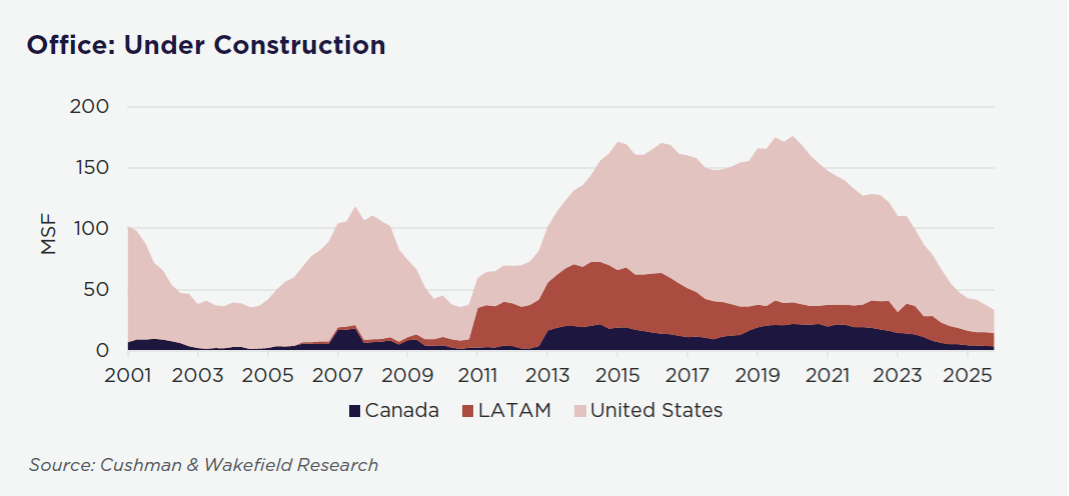
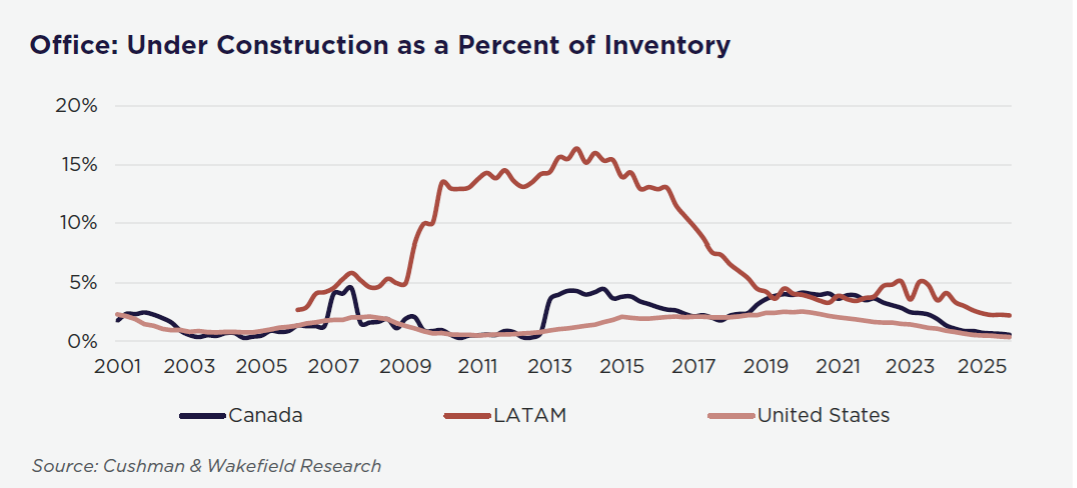
Elevated interest rates, tighter lending standards, economic uncertainty, the completion of pre-pandemic projects, and structural changes in office demand have all contributed to reduced development activity, pushing construction development across the Americas to a near 25-year low (Cushman & Wakefield, 2026, p. 17). Yet even as overall construction activity remains limited, tenant improvement allowances continue to rise as landlords put more capital into existing buildings to attract and retain tenants.
This model suggests that, rather than moving into brand-new space, many tenants are making a more deliberate decision to modernize what they already have, improve the employee experience, and avoid the disruption and cost of a full relocation. Cushman and Wakefield notes that strategic workplace investment is increasingly important in a market where securing the right location depends on thoughtful design, targeted fit outs, and long-term value creation. The report also outlines that tenant improvement models built around adaptive reuse are a strong signal that renovation and reconfiguration, not just greenfield buildout, are core in today’s office decision-making.
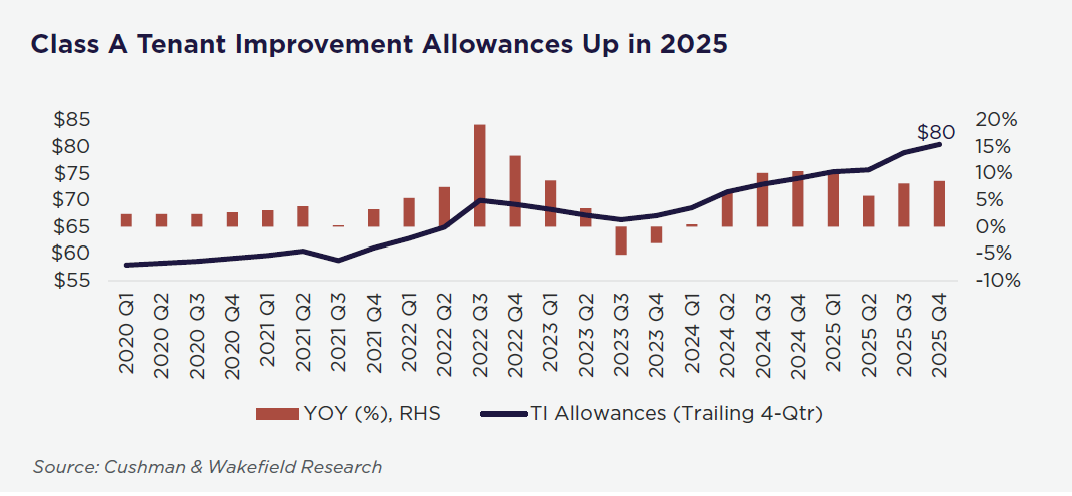
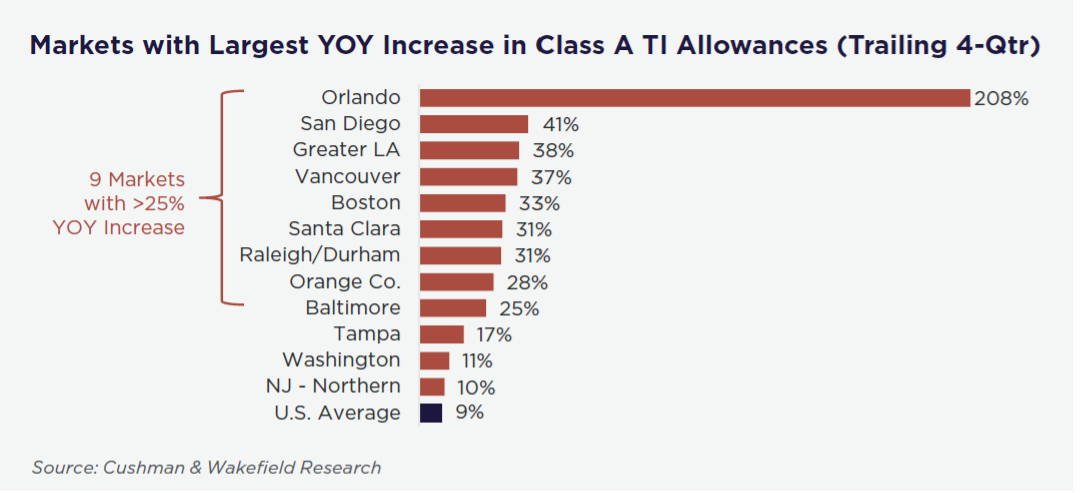
Against this backdrop, the need for functional, modern workplaces remains, bringing tenant improvements into sharper focus. The report underscores a steady increase in tenant improvement allowances, driven by landlord competition for quality tenants, rising fit-out costs, and continued investment in existing assets. At the same time, tenants are expecting more, from higher-end finishes and collaborative layouts to enhanced amenities and environments that promote in-office engagement. The higher cost of delivering these spaces is leading to larger tenant improvement packages The report’s chart on U.S. tenant improvement allowances shows a clear upward trend through 2025, and several markets posted year-over-year increases above 25%, with Boston showing a 33% increase (Cushman & Wakefield, 2026, p. 21).
This changes the economics of occupancy. If a landlord is willing to put more money into improving a tenant’s existing or next-generation space, companies can stay in a familiar location, preserve access to labor and customers, avoid the friction of a move, while still creating a workplace that looks and feels new.
Of course, renovation is not cheap. The report states that office fit out costs across the Americas now average $149 per square foot, up 5.5% year over year. In the United States, fit out costs rose 5% on average, with the Northeast up 7% (Cushman & Wakefield, 2026, p. 28). General contractors surveyed by Cushman & Wakefield do not expect labor or material costs to decline over the next six months, and the vast majority expect both labor and material costs to increase signaling no reprieve in the near future (Cushman & Wakefield, 2026, p. 28).
As more tenants choose to reinvest in their existing footprint, the need is no longer limited to a traditional relocation from Point A to Point B. Instead, tenants increasingly seek partners who can support the full lifecycle of workplace change. What does full lifecycle support look like? It begins with thoughtful planning and project management; and extends into decommissioning the existing footprint, supporting the clearing, removing, recycling, donating, and responsible disposal of furniture, fixtures, and materials ahead of renovation. It continues further with installation support, furniture resets, and the physical execution required to bring a redesigned space online. Support may also extend to long or short term storage, where high per-square-foot costs make offsite solutions more efficient than using valuable onsite real estate for surplus materials.
This is not just a construction or real estate story; it’s also a logistics and execution story. As tenants choose to renovate rather than relocate, the need for coordinated operational support becomes increasingly important. At Wakefield we partner with customers to help comprehensively manage that transition, offering services beyond traditional relocation.
We support large-scale decommissioning, FF&E installation and reconfiguration, phased project execution, and offer over 250,000 square feet of warehouse space. As tenants continue to invest in modernizing their workplaces, these capabilities play a critical role in ensuring projects are executed efficiently while minimizing disruption to employees and operations.
By supporting the full lifecycle of workplace change as an integrated partner, Wakefield helps customers maximize their renovated footprint and keep high-cost space focused on productive use rather than overflow.
If you are planning an office renovation or evaluating how to modernize your space, we’d welcome the opportunity to partner with you. Please don’t hesitate to reach out to learn more about how we can support your specific project.
Founded in 1958, Wakefield Moving & Storage is a trusted New England commercial moving and storage provider. Wakefield delivers precision moving, storage, logistics, and installation services for higher education, healthcare, laboratories and commercial sectors.
Known for a service-first culture, with flexible capabilities that scale as clients grow, Wakefield goes beyond trucks and boxes to plan, execute, and optimize every move. Through its ARMS division, Wakefield provides secure records management, document storage, and certified shredding services. Now part of Tobin Scientific, Wakefield offers expanded capacity and unmatched expertise across high-compliance, mission-critical industries.
Sources:
Cushman & Wakefield. (2026). Office fit out cost guide. Cushman & Wakefield. Retrieved May 4, 2026, from https://www.cushmanwakefield.com/en/united-states/insights/office-fit-out-cost-guide


